
Archives of the Western and Northern Territories at the Western Institute
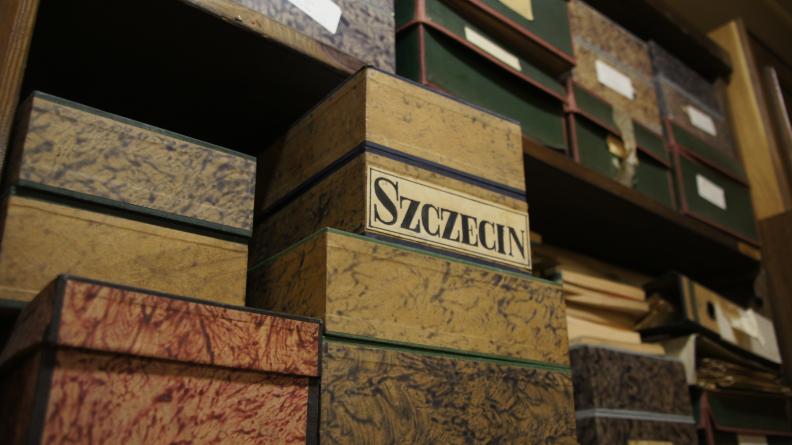
The goal of this project is to preserve and make more widely available the diaries held in the Western Institute’s collection. The project involves the digitization of diary materials from three competitions organized by the Western Institute.
The Western and Northern Lands Archive of the Western Institute
Drawing on the tradition of Poznań sociology—a field inspired by Florian Znaniecki’s ideas on culture and his humanistic methodology—the Western Institute has, over the years, collected diaries of settlers from the Western Territories. Three contests were organized, during which approximately 1,100 memoirs were collected. These memoirs served as the basis for numerous studies describing the social and cultural transformations taking place in the Western Territories, authored by, among others, Zygmunt Dulczewski and Andrzej Kwilecki:
- The December 1956 Contest for Diaries of Settlers in the Recovered Territories (a total of 227 entries were submitted);
- A 1966 contest for diaries by young residents of the Recovered Territories (167 entries);
- A 1970 contest for diaries by residents of the Western and Northern Territories (747 entries).
The entries from the 1956 and 1970 contests are particularly interesting, as they were written in the aftermath of political upheavals, which encouraged the authors to express themselves candidly. They contain many critical facts, observations, and reflections—for example, the Katyn massacre, the massacres in Volhynia, the expulsion of Germans, looting and rapes committed by Red Army soldiers, irregularities in the functioning of the Polish administration, etc. For this reason, censorship prevented their publication. Consequently, these materials were inaccessible and, to a large extent, untapped. Access to the entire collection was limited to a small group of researchers from Poland, and after 1989, also from Germany. Interest in these materials has not waned over the years. They are an interesting source for cultural studies scholars, ethnologists, historians, and sociologists. Unfortunately, it is not possible to fully utilize them as valuable sources of information due to their progressive deterioration. Given that most of the texts are manuscripts, it is also impossible to conduct in-depth analysis of them using modern computer analysis techniques (e.g., qualitative and semantic analysis tools).